You have probably seen it: a favorite top with small bumps at the shoulders, or a sweater that now hangs longer than it used to. The clothes were washed properly and put away neatly, so what went wrong? Very often, the answer is storage. Knowing which clothes to hang or fold is one of the simplest ways to protect a wardrobe, and it costs nothing.
This guide explains the logic behind each choice, so you can decide for any garment, not just the ones listed here.
The Principle: Gravity, Structure and Time
Before looking at specific garments, it helps to understand what storage actually does to fabric. A hanger holds a garment by a small area at the shoulders, and everything below pulls downward. Over days and weeks, that constant pull has an effect. Fabrics that are woven tightly, or that have built-in structure, resist it well. Fabrics that are knitted, loose or heavy give way, because their fibers can slide and stretch under load.
Folding works the opposite way. It spreads the weight across a surface, so no single point carries the load. The trade-off is creasing: folds can leave lines, especially in fabrics that wrinkle easily or in garments with a tailored shape.
So the question to ask is simple. Does this garment need to keep a shape that folding would crush, or does it risk stretching under its own weight? Structured and wrinkle-prone items favor hanging. Heavy, stretchy or knitted items favor folding.
Garments That Belong on a Hanger
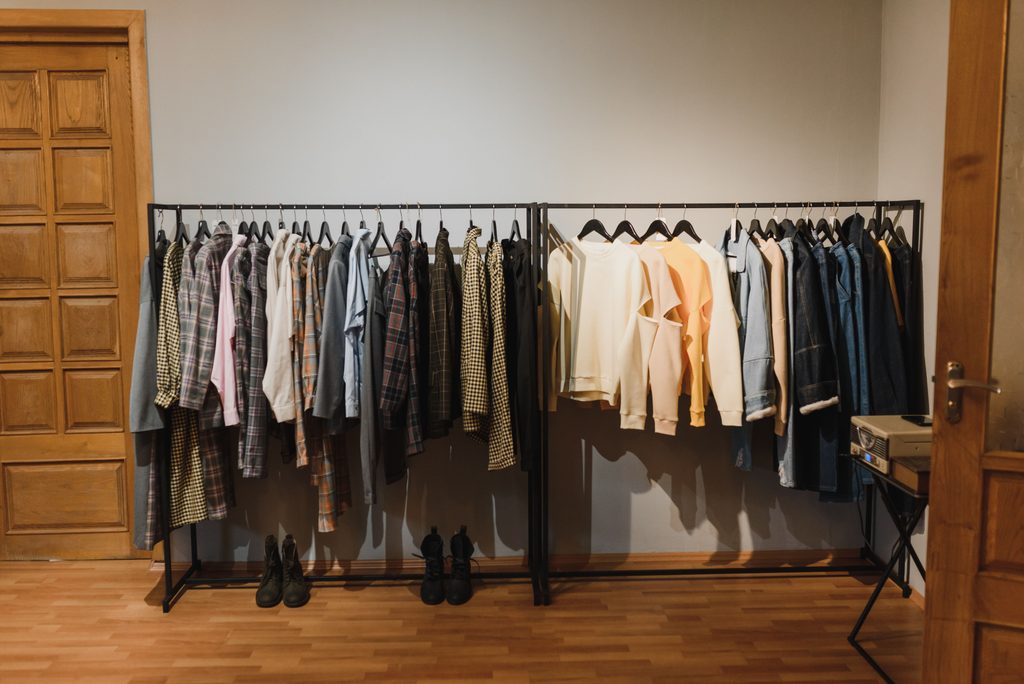
Shirts and Blouses
Woven shirts, whether formal, work or cotton, are among the best candidates for hanging. The reason is shape. A shirt has a collar, a front placket and long sleeves, all of which crease easily when folded and stored under other clothes. Hanging lets the fabric fall straight and keeps the collar neat.
Two small habits improve the result. First, fasten one or two of the top buttons before hanging, which helps the collar hold its shape and keeps the shirt from slipping off. Second, match the hanger width to the shoulders. A hanger that is too narrow pulls the shoulder seam inward and leaves a dent, while one that is too wide pushes the seam outward. The hanger’s ends should sit close to where the shoulder seam naturally falls.
Blazers and Suit Jackets
Tailored jackets are built with internal structure: shaped shoulders, a supported chest and a collar that rolls in a particular way. This construction is what makes them look sharp, and it is also what folding damages. Creases in a jacket are often hard to remove, especially in places with layered fabric.
For these garments, the hanger matters more than for anything else. Choose a wide, contoured hanger, often made of wood or with thick padding, that follows the curve of the shoulder. A thin wire hanger can leave a permanent point at each shoulder. It also helps to leave a little room around the jacket, so the sleeves and lapels are not crushed by the clothes next to them.
Dresses and Skirts in Lightweight Fabrics
Light fabrics such as thin cotton, rayon and other woven materials usually do well on a hanger. They are not heavy enough to stretch, and hanging prevents the sharp creases that come from stacking.
For dresses with thin straps, a standard hanger can let the straps slip off. Hangers with notches or hooks solve this, and some skirts hang best from clip hangers that hold the waistband. Longer dresses may need more vertical space, so check that the hem does not touch the floor, which can cause dirt and wear.
Dress Trousers
Formal and office trousers keep their appearance best when hung, because the crease line is part of the design. Use a clip hanger or a bar-style hanger, and align the trouser legs along the center crease before hanging. A bar hanger lets the trousers drape over it, which avoids pinching marks, while clips should be padded or used near the hem or waistband where marks matter least.
Jackets, Cardigans and Light Outerwear
Most jackets can be hung if the hanger is strong enough for their weight. This makes them easy to find and keeps the closet from becoming a pile. Jackets with structured shoulders need the same wide hanger as a blazer. Thick, heavy coats deserve their own space, since a bulky coat pressed against other garments will crush and crease them. Cardigans in light fabrics can be hung, but heavier knit cardigans are better folded, as described below.
Wrinkle-Prone Fabrics
Linen, some cottons and certain blends crease easily when folded for long periods. Hanging reduces this, but it is not magic. Fabric type, thickness and humidity all influence how a garment looks when you take it out, so some wrinkling is normal even when hung.
Garments That Are Better Folded
Knit Sweaters
Knitwear is the clearest case for folding. Wool, chunky knits and loosely constructed sweaters carry a lot of weight, and their loops of yarn can stretch when pulled downward. The shoulders are the first to suffer, as they bear the weight of the entire body and sleeves. Over time, the garment can grow longer and lose its shape.
Fold sweaters neatly and keep them on a shelf. Avoid stacking too many in a single pile, because the weight at the bottom compresses the fibers and can cause creasing or flattening. If you must hang a knit, a padded hanger with a wide surface reduces the stress, but folding remains the safer option.
T-Shirts
T-shirts are more flexible than people expect. Many are knitted, so a long stay on a hanger can create shoulder bumps or stretch the neckline. For favorite tees you want to keep for years, folding is the safest choice. That said, a stable, lightweight tee on a suitable hanger will usually be fine. The right question is how soft and stretchy the fabric is: the softer the knit, the more it benefits from folding.
Hoodies
Hoodies are thick, heavy and full of fabric. Hung for a long time, their weight pulls on the shoulders and can leave them misshapen, and the hood can also distort the neckline. Folding keeps their shape and uses space efficiently. Fold them with the hood tucked in, and place them on a shelf instead of a high stack.
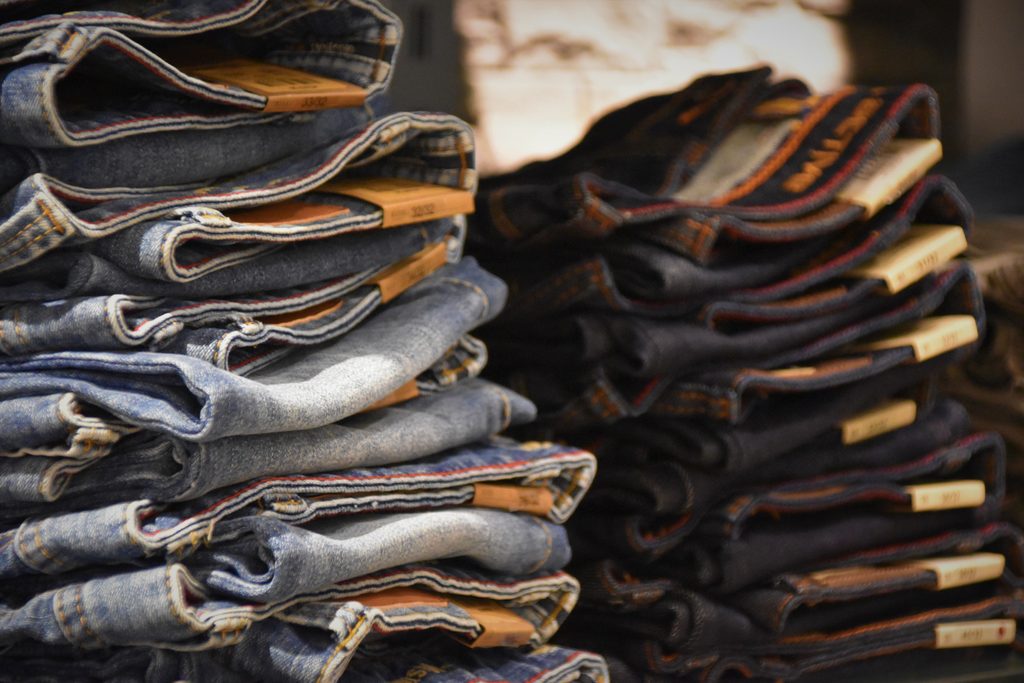
Jeans
Denim is sturdy, so it tolerates folding well and takes up little space. Because jeans are heavy, they are also well suited to a shelf or drawer. Hanging is still an option if you prefer it: use a clip hanger by the waistband or hem to reduce creasing and keep the legs straight. The choice comes down to space and preference more than risk.
Quick Reference
| Garment | Best storage | Why |
|---|---|---|
| Dress shirts | Hang | Protects collar and sleeves from creasing |
| Blazers and suit jackets | Hang (wide hanger) | Keeps shoulders and structure intact |
| Light dresses and skirts | Hang | Prevents creases from stacking |
| Dress trousers | Hang | Preserves the crease line |
| Light jackets | Hang | Easy access, holds shape |
| Knit sweaters | Fold | Prevents stretching at shoulders |
| T-shirts | Fold (hang if stable) | Soft knits can stretch or develop bumps |
| Hoodies | Fold | Heavy fabric pulls on shoulders |
| Jeans | Fold (hang optional) | Sturdy and space-efficient folded |
Storage Habits That Protect Your Clothes
Choosing between hanging and folding is only half the job. Several everyday habits decide how long garments last.
Match the hanger to the garment. A single type of hanger cannot suit everything. Thin hangers work for light tops, but jackets, blazers and heavy coats need broader, sturdier support. For knits you cannot fold, choose a wide, padded hanger and avoid hooking the straps in a way that pulls on the fabric.
Make sure clothes are fully dry. Putting slightly damp clothing in a closet is one of the easiest ways to cause musty smells and mildew, especially in warm, humid climates or rainy seasons. Dry garments completely before storing them, and use a well-ventilated area when the weather slows drying.
Do not overfill the closet. Crowded clothes press against each other, which creates creases and prevents fabric from keeping its shape. Leave a little space between hangers, and when folding, stack by weight and thickness so the pile stays stable, with heavier items at the bottom.
Clean the closet regularly. Dust and moisture build up quietly. Occasionally empty the space, wipe it down and check that air can move through it. A clean, dry closet protects clothes more than any accessory you add.
Read the care label. The label is the manufacturer’s guidance on washing, drying and ironing, and it is the quickest way to understand a fabric you do not know. When in doubt, follow it.
Final Thoughts
Good storage is not complicated, but it is specific. Structured, wrinkle-prone clothes such as shirts, blazers, light dresses and dress trousers usually belong on a hanger. Heavy, stretchy or knitted pieces such as sweaters, hoodies and soft tees are safer folded. Jeans can go either way.
What ties all of this together is paying attention to fabric, weight and structure instead of following one rule for everything. A few minutes spent choosing the right hanger or folding method can add years to a garment, and for pieces you love, that is time well spent.
