Fashion rarely stays in its own decade. A collection that raised few eyebrows on the runway fifteen years ago can look sharper today, once tastes have caught up with it. Loewe’s Fall/Winter 2011–2012 show is a good case. Presented under Stuart Vevers, then the house’s creative director, it paired luxurious leather and unusual textures with two sensibilities: Loewe’s Spanish heritage and Vevers’s own British outlook.
On paper, it looks like a relic. In practice, the things it cared about are the things people are still buying and writing about in 2026: well-built outerwear, rich materials, and pieces with a clear point of view. Leather jackets, structured coats and vintage-leaning shapes are all back in the conversation. Going back to this collection is a useful way to see which ideas last and which were only a season’s mood.
What stands out is how little Vevers chased trends. He worked from what Loewe already was, a house built on leather craftsmanship, and made clothes that were luxurious, wearable and recognizable at a glance.
Leather, Done Properly
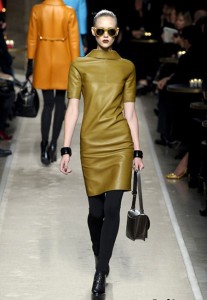
Leather was the backbone of the collection, which is hardly surprising for a Spanish house known for working it. What made the show worth remembering was how far it went beyond the standard jacket and coat. Shape, texture and construction were all pushed.
The runway included delicate tops with scarf-like collars, wide button-front vests, A-line skirts and carefully shaped dresses. Together they showed that leather could handle structured outerwear and softer, more feminine pieces equally well.
The interiors deserve a mention too. Cashmere and silk linings gave the garments a softness against the skin that offset the weight of the leather on the outside. It is a small detail, but it points to something that matters even more now: in luxury, value is no longer judged by appearance alone. How a piece is made, how it feels to wear and how many ways it can be styled all count.
Leather outerwear is again a fixture of fashion coverage in 2026, from oversized bombers and relaxed vintage jackets to sleeker, tailored cuts. Against that backdrop, Loewe’s earlier work reads less like history and more like an early draft of the current moment.
Statement Outerwear and Vintage-Inspired Shapes
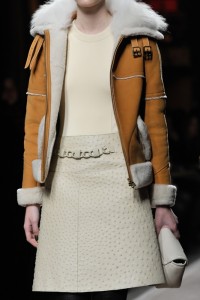
Vevers treated outerwear as the foundation of the winter wardrobe, not as an afterthought. Padded leather coats, sculptural jackets and vests added volume without swallowing the body. Many of the coats stopped around mid-thigh, a compact length that gave them a distinctive look.
That balance between volume and control is exactly what designers are working through today: oversized proportions on one side, sharp tailoring on the other, and vintage references running through both. Current leather jackets come distressed, cropped, slouchy or long and coat-like. Loewe’s 2011 collection had already touched on several of these ideas, and it did so without relying on exaggeration.
The styling lessons carry over easily. A structured leather jacket can anchor an otherwise simple outfit. A leather vest adds texture when layered. A-line skirts and fitted dresses offset the weight of heavier outerwear. The result is a wardrobe built around a few strong pieces, not a closet full of trend purchases.
Spanish Heritage, British Instinct
The collection’s most distinctive quality was the way it combined two cultural influences without letting either one dominate.
Vevers brought a British design background to a house rooted in Spanish craft and artistic tradition. Instead of choosing between the two, he let the friction between them shape the clothes. The British side showed up in unconventional construction: unexpected openings, high necklines and buttons placed along the back of tops and dresses. These details gave familiar pieces an experimental edge.
The Spanish side came through in references to cathedral architecture. Stained-glass rose windows inspired prints on long-sleeved dresses and pleated skirts, setting a traditional artistic source against modern construction.
This is how heritage works best in luxury fashion. Houses draw on their archives and cultural roots, but the strongest results go beyond recognizable symbols. Here, the Spanish identity influenced the patterns, materials and construction themselves, rather than appearing as decoration.
A Restrained Palette with a Few Surprises
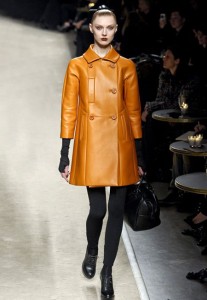
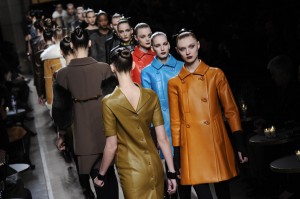
Leather and texture dominated, but color kept the collection from feeling austere. The palette ran through brown, cream, black, olive green, apricot, orange and bright neon blue.
The earth tones, set against leather, suede and cashmere, provided the base. Black added a quieter, more formal note, while apricot and orange brought warmth. The neon blue was the real surprise. On padded leather outerwear, it cut sharply against the muted shades and gave the collection a younger, more playful tone.
There is a practical takeaway here. A neutral wardrobe does not have to be predictable. One strong color, in a jacket, a bag or an accessory, can change an entire outfit, and it costs far less than rebuilding your closet each season.
Accessories Built on Craft
The accessories carried the same emphasis on craftsmanship. The handbags ranged from oversized evening clutches and small trunk-inspired cases to more traditional mid-sized styles. Some had envelope closures, others rounded silhouettes with small decorative pockets, and a larger bowler-shaped bag offered a take on a classic form.
They supported the clothes without competing with them. Olive-green rimmed sunglasses and retro lace-up shoes on thick heels added a slightly nostalgic note, balancing classic references with modern proportions.
That logic holds today. A well-made bag or a distinctive pair of shoes tends to do more for a personal style over the years than a trend-driven statement piece. The 2011 accessories also show that traditional shapes stay appealing when the materials and details are done with care.
Bringing the 2011 Look into a Modern Wardrobe
The aim is not to copy the runway looks. It is to borrow the principles behind them.
Pair a structured leather jacket with a simple top and a flowing skirt, and the strong outerwear is softened by the lighter pieces. Layer a leather vest over thin knitwear or a fitted shirt for texture without bulk. For a quieter approach, brown, black, cream and olive green mix easily and give you a base for bolder pieces. Finish with a structured bag, retro-inspired shoes or minimal sunglasses, and keep it to one or two standout items so the outfit stays balanced.
The collection also argues, implicitly, for buying better and less often. Well-made outerwear and versatile accessories give more long-term value than constantly replacing garments to keep up with short-lived trends. That does not mean everything from an older collection is timeless. The skill lies in spotting the qualities that adapt across eras, tastes and settings.
Why It Still Matters
Fifteen years on, Loewe’s Fall/Winter 2011–2012 collection remains a useful reference for how luxury fashion has developed. Its strength was not in any single garment or color but in the way it combined traditional leather craft, unconventional construction, cultural references and modern silhouettes.
The current revival of leather outerwear makes it especially relevant. Designers today are still working through the same questions of classic jackets, vintage shapes, structured coats and expressive texture. Silhouettes and styling have moved on, but the appeal of a well-made leather garment has not.
It is also worth noting how Vevers handled the challenge of designing for a heritage house. He respected Loewe’s identity while bringing in his own background, which kept the collection tied to the brand’s history without being confined by it.
Revisiting this collection is not nostalgia. It is a reminder that fashion history can feed both current wardrobes and future design. Some ideas disappear as quickly as they arrive, and others keep shaping how designers think about materials, proportion and craft. For anyone interested in the lasting appeal of leather, this collection is still worth a look.
