Open any closet and you are looking at a century of decisions. The white T-shirt owes its status to 1950s rebels, the sneakers to 1980s basketball courts, the baggy jeans to 1990s skate parks and recording studios. Men’s fashion through the decades is not a straight line from formal to casual. It is a long conversation between rules and the people who broke them, and each generation answered the one before it.
What makes this history worth studying is that clothing rarely changes for aesthetic reasons alone. Economics, war, film, music, technology and class anxiety all leave fingerprints on the wardrobe. Understanding why a silhouette appeared makes it much easier to judge whether it deserves a place in your own closet. This guide walks through the conversation era by era, covering what defined each decade, why it happened, and which ideas are still worth borrowing.
1920s–1930s: The Age of Tailoring
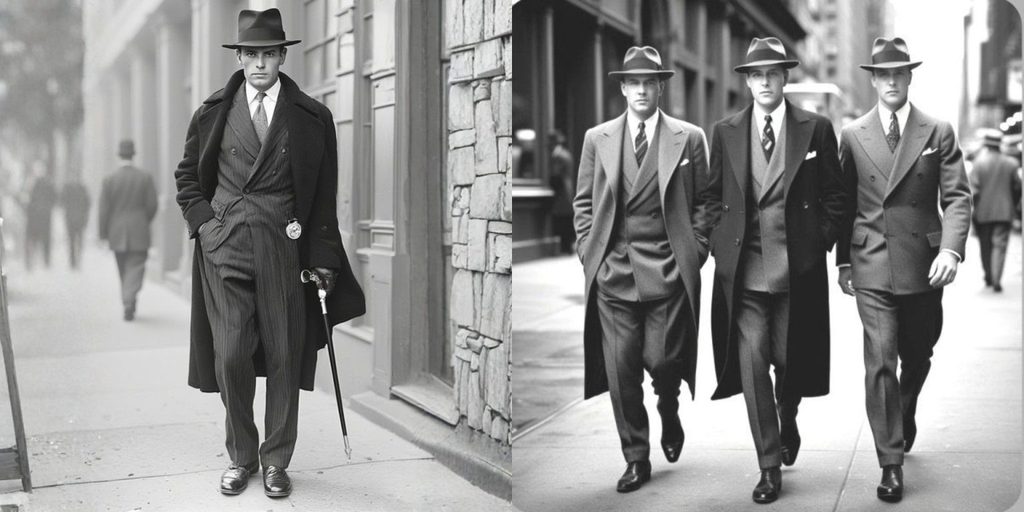
In the early twentieth century, getting dressed was a matter of social order. A man’s clothing told strangers his job, his income and his respectability before he spoke. Men of nearly every class wore collared shirts and tailored trousers in public, and the suit was the clearest signal of status. Casual clothes did exist, and denim was already common as durable workwear, but it belonged to the job site, not to public life. The idea of dressing down for leisure had barely begun.
The three-piece suit, with matching jacket, waistcoat and trousers, became the standard for men who could afford it. Its logic was structural. High-waisted trousers, a waistcoat that smoothed the torso and a jacket with defined shoulders created a long, controlled vertical line. Fedoras, bowlers and flat caps finished the look, since going bareheaded outdoors was considered improper, and black or dark brown Oxfords and derbies anchored it from below. Every element had a rule, and breaking one was noticed.
The 1930s added a cinematic layer. Even as the Great Depression tightened budgets, cinema gave men new models of elegance to aspire to. Actors like Cary Grant and Clark Gable popularized a sleeker, more athletic line: broader lapels, a strong shoulder and trousers that skimmed the leg instead of ballooning around it. This mattered because it was the first time a mass audience learned to copy the clothes of people they would never meet. The ideal man now lived on a screen, and tailors, department stores and ordinary men all adjusted to match him.
What to borrow today: the discipline of fit. A single well-cut suit teaches more about proportion than a closet of average ones. A classic jacket, a vest, an analog watch and Oxfords still read as sharp at formal events, and they work as smart casual when dressed down with a knit or an open collar. The era’s real legacy is the idea that clothes should be built around the body, not draped over it.
1950s–1960s: Rebels, Preppies and Mods
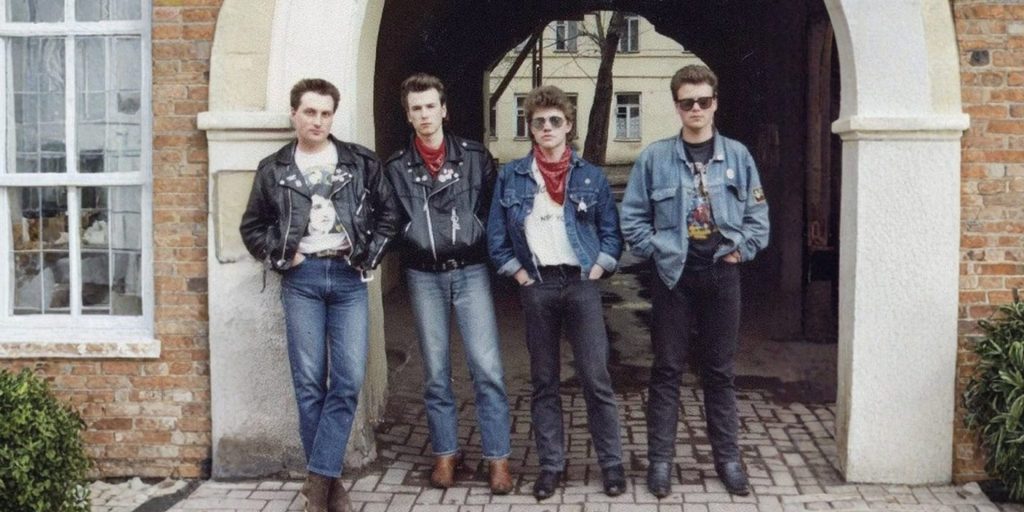
After World War II, a generation that had grown up around rationing, uniforms and duty had little appetite for its fathers’ formality. For the first time, “teenager” became a recognizable market and identity, with its own music, its own spending power and its own clothes. Menswear stopped being a single ladder to climb and split into camps defined by attitude.
The rebel look came from rock ’n’ roll and screen icons like Marlon Brando and James Dean: a black leather jacket, a plain white tee, cuffed jeans and boots. Its power came from what it repurposed. The T-shirt had been underwear, the jeans were workwear and the leather jacket was military and motorcycle gear. By wearing them in public, young men turned humble garments into a statement of defiance, and the look worked because it was so simple that nobody could dismiss it as costume.
On the other side stood the Ivy League look, polished and academic, built from chinos, Oxford shirts, knit sweaters and loafers. It was rebellion of a different kind. It rejected the stiffness of the suit while still signaling education and ease, a relaxed kind of status that did not need to announce itself. In that sense, preppy style was the ancestor of today’s “old money” aesthetic.
Then the 1960s brought the Mod movement and the British Invasion. Slim suits, narrow trousers, turtlenecks and Cuban-heeled boots gave youth culture a sharper, more futuristic silhouette, one that treated tailoring as a youthful, urban pursuit instead of a mark of age. Color also returned to menswear, which had long been dominated by dark and neutral tones, and the idea that men could care openly about fashion began to spread.
| Style | Icons | Signature pieces | Mood |
|---|---|---|---|
| Rebel / Rocker | James Dean, Elvis Presley | Leather jacket, white tee, cuffed jeans, boots | Defiant, cool |
| Ivy League / Preppy | JFK, Cary Grant | Chinos, Oxford shirt, knit sweater, loafers | Clean, academic |
| Mod | Early Beatles | Slim suit, turtleneck, Cuban-heel boots | Sharp, modern |
What to borrow today: the white tee, dark jeans and leather jacket formula has lasted roughly seventy years for a reason. It needs no accessories and almost no thought, yet it looks deliberate. Chinos with an Oxford shirt remain the easiest route to a clean, polished outfit, and a slim turtleneck under a tailored jacket is a Mod idea that still feels current.
1970s: Fashion as Self-Expression
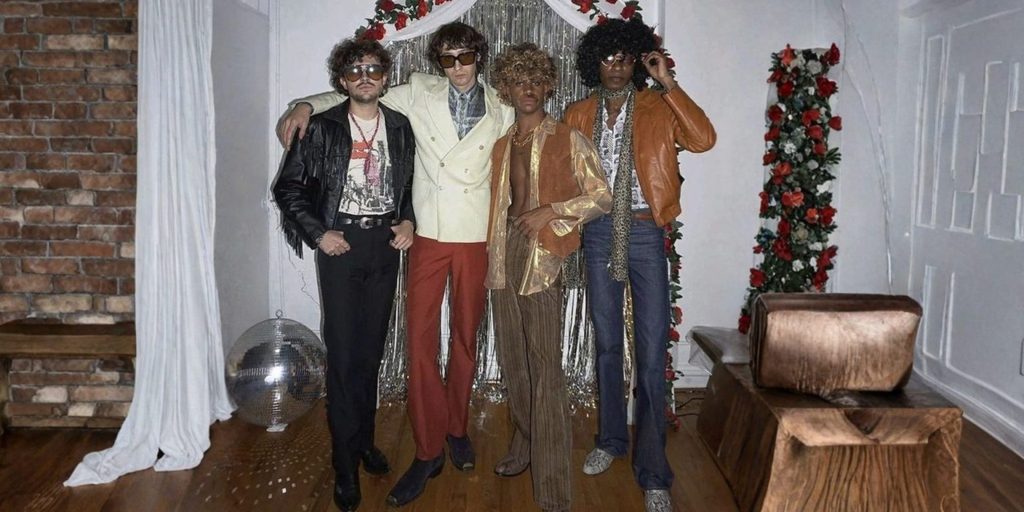
If one decade gave men permission to be theatrical, it was the seventies. Shirts came with oversized collars, trousers flared at the hem, and platform shoes added serious height. It is easy to laugh at these shapes now, but they made sense in context. The social upheavals of the previous decade had loosened old expectations, and clothing became one of the quickest ways to show where you stood.
The decade split into two moods. Disco was glossy and bright, built for dance floors, with satin shirts, fitted trousers and clothes designed to catch the light. The bohemian look was loose, natural and anti-establishment, with earth tones, relaxed fits and an openness to ideas borrowed from other cultures. They looked nothing alike, but they shared a belief that clothing could be a form of freedom instead of obligation.
The seventies also changed what men were allowed to enjoy about clothing. Color, texture, pattern and a more fluid sense of masculinity entered mainstream menswear, and the notion that caring about appearance was somehow unmasculine began to weaken. This is one of the quiet foundations of today’s more open approach to style.
What to borrow today: wide-collar shirts and flared trousers have returned as part of the retro revival, but the better lesson is confidence. A single bold piece, worn without apology, can carry an entire outfit. Try a statement collar, a rich earth-tone jacket or a flared hem, and keep everything else simple so the one daring item reads as a decision rather than a costume.
1980s: Power, Logos and the Rise of Sneakers
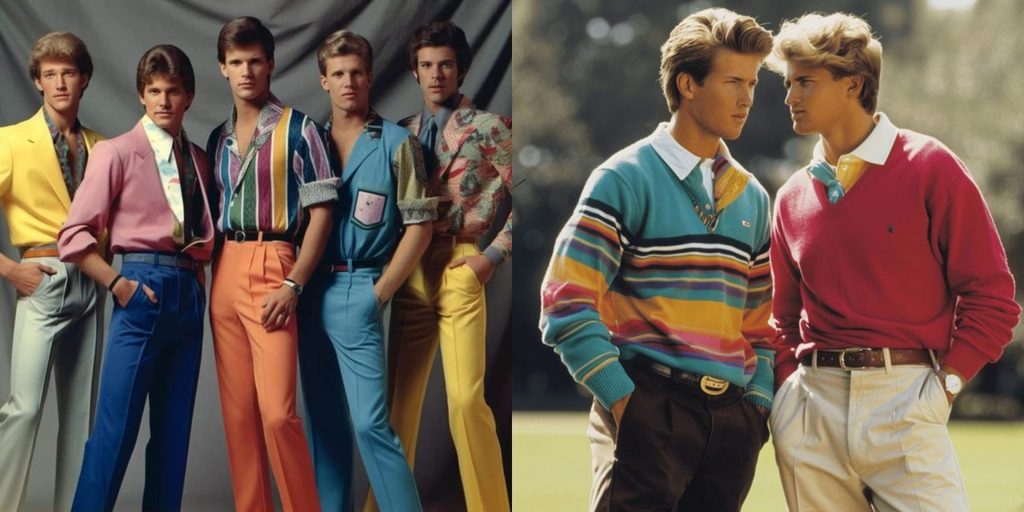
The eighties believed that bigger was better. Jackets gained wide shoulder pads, colors turned loud, and logos became a language of status. In a decade shaped by finance and ambition, clothing was meant to project authority, and the so-called power suit did exactly that, using an exaggerated shoulder to make the wearer look larger and more commanding. Designer labels moved from the background to the foreground, and visible branding became a way of showing success.
At the same time, fitness culture and aerobics moved athletic wear into daily life. Tracksuits, headbands and trainers appeared well beyond the gym, and brands like Nike, Adidas and Reebok grew into cultural forces. The 1985 launch of the Air Jordan was a turning point. It changed the sneaker from sports equipment into a collectible fashion object, tied to a personality instead of a purpose, and it laid the foundation for today’s sneaker culture, resale markets and limited drops.
The decade left two opposite legacies. One is the idea that clothes should communicate status loudly, which later returned in hype culture. The other is the athletic influence, which slowly erased the line between sportswear and everyday wear and eventually produced athleisure.
What to borrow today: retro tracksuits are back, and the oversized blazer with a slightly broader shoulder, a major recent trend, is a direct descendant of the eighties power suit. The modern version is softer and more relaxed, so it is easier to wear. The sneaker you wear to work is also an eighties inheritance, and it is worth remembering that a single pair can anchor an entire outfit.
1990s: Grunge, Hip-Hop and the Birth of Streetwear
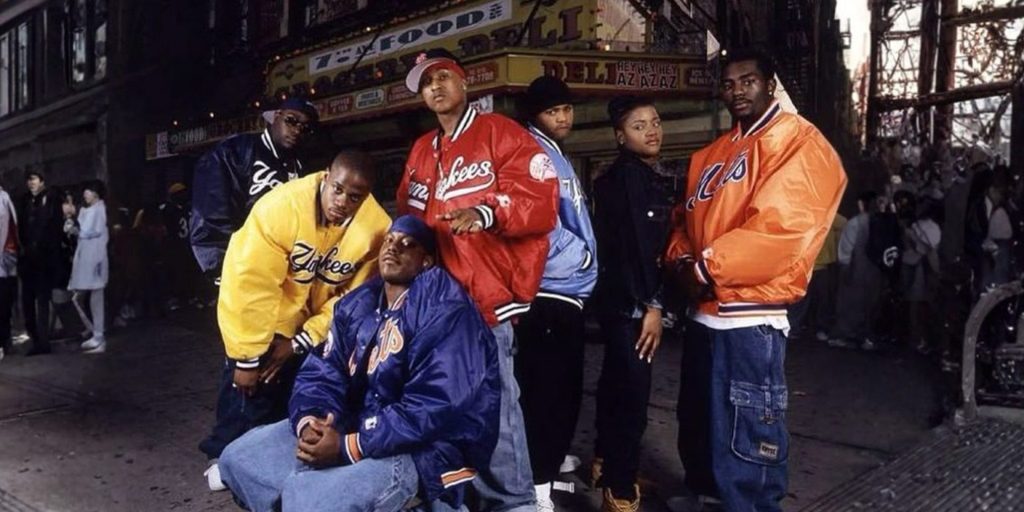
Ask fashion writers which decade shaped modern menswear most, and many will point to the nineties. It was the decade when street culture began to influence luxury instead of merely reacting to it. Two opposing movements dominated, and both grew from music rather than from fashion houses.
Grunge, inspired by bands like Nirvana and the Seattle scene, favored an unbothered look: open flannel over a black tee, ripped jeans and Dr. Martens boots. Much of it came from thrift stores and workwear, and it was a deliberate rejection of the polish and excess of the previous decade. Its message was that you did not need to try, and the irony is that the look still required a great deal of taste to wear well.
Hip-hop style went in another direction, with baggy pants, oversized hoodies, snapbacks, sneakers and an emphasis on brands worn with pride. Artists turned labels and sneakers into statements of identity and ambition, and an entire ecosystem of urban brands grew around them. Both movements rejected the idea that good style meant formality, and together they helped create streetwear as a force that still drives the industry today.
What to borrow today: baggy jeans, oversized flannels, graphic hoodies and work boots are all in rotation again, and much of what circulates online as “Y2K fashion” traces directly to this decade. The key is proportion. If the bottom is loose, keep the top more fitted, or the reverse, so the outfit looks intentional rather than shapeless. Good boots and well-washed denim also make the casual look feel considered.
2000s–2010s: From Slim Fit to Hypebeast
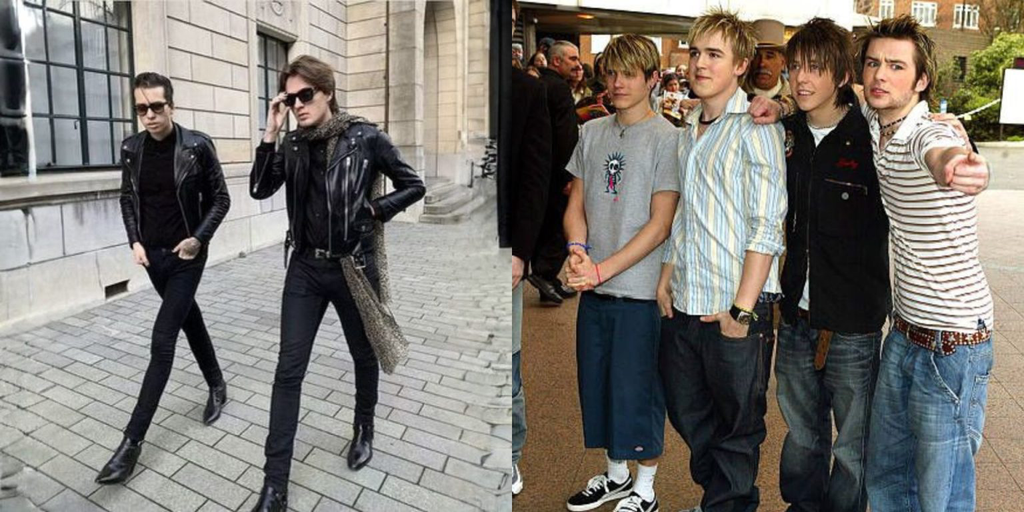
The 2000s reversed the nineties. Silhouettes narrowed, and skinny jeans became the defining item, paired with graphic tees and slim denim jackets. Fashion houses pushed a lean, fitted look for men, and for many that was the first time they had worn clothing cut so close to the body. The decade also gave us “metrosexual,” a label for men who openly cared about grooming, skincare and style without feeling any less masculine. Whatever one thinks of the word, it marked a lasting shift: caring about appearance stopped being something men had to hide. Washed, distressed and vintage-effect fabrics dominated, and local brands and independent labels flourished in many countries, including Indonesia, where distro culture gave young people their own fashion scene.
The 2010s were the most crowded decade of all, because social media let every subculture live at the same time. Trends could spread in hours, and someone in Jakarta could build a Brooklyn-inspired look from a Pinterest board. Normcore, a deliberate anti-fashion stance built on plain tees, chinos and clean white sneakers, thrived next to hypebeast culture, which prized limited drops from labels like Supreme and Off-White. The two were opposites that fed on the same instinct: a desire to signal taste, either through restraint or through scarcity.
Athleisure, the merger of sportswear and everyday clothing, spread through joggers, bomber jackets and chunky sneakers. It reflected a bigger change in how people lived, with more flexible work, more time spent moving between settings and a stronger preference for comfort.
What to borrow today: normcore’s real lesson is that fit and detail matter more than novelty. A perfectly cut plain tee and chinos can look more considered than a loud outfit. And from hype culture, the useful takeaway is selectivity: one standout piece, such as a rare sneaker or a distinctive jacket, can lift an otherwise simple look.
2020s: Personal, Fluid and Quieter
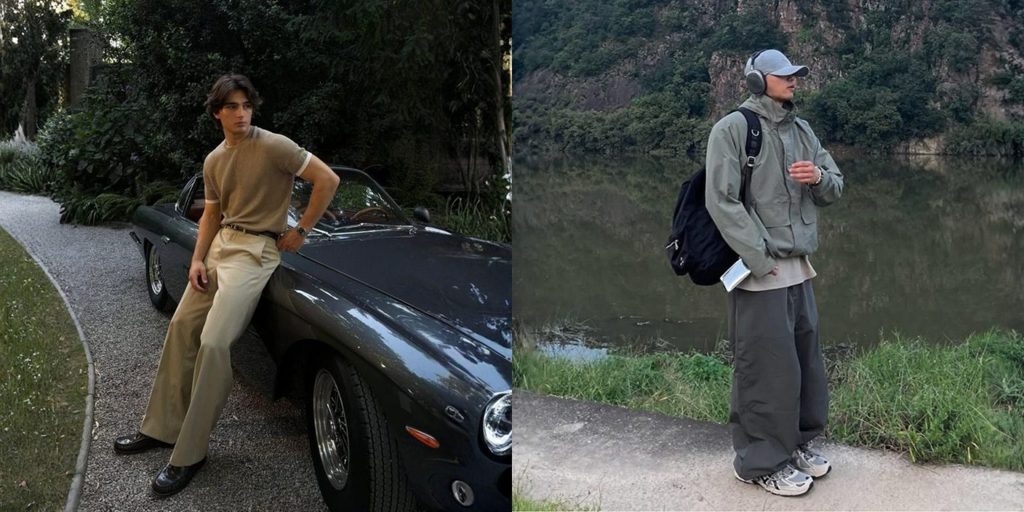
The current decade is the freest so far. The old divide between what is “for men” and what is “for women” has softened, and style has become personal and experimental. Social media gives every look an audience, and thrift stores, resale apps and vintage markets give everyone access to pieces that no longer exist in regular retail.
The pandemic accelerated this shift. People first wanted comfort at home, then returned to public life more expressive, as if celebrating through clothing. Meanwhile, quiet luxury began to challenge hype culture, favoring understated quality over visible logos. Its appeal is easy to understand after years of constant branding: a cashmere sweater or a well-cut pair of trousers shows value through fabric, fit and finish, not through a label, and those who notice are the ones who understand.
Alongside that, practical and nostalgic trends run in parallel. Gorpcore brings outdoor gear into the city, workwear celebrates durability and function, and the Y2K revival taps into nostalgia for the early 2000s. Sustainability has also moved from a niche concern to a mainstream one, encouraging people to buy secondhand and wear things longer.
| Trend | What it means | Key pieces |
|---|---|---|
| Quiet luxury | Minimal, subtle branding, quality first | Cashmere sweater, tailored trousers, logo-free loafers |
| Gorpcore | Outdoor gear styled for the city | Technical jacket, cargo pants, trail shoes |
| Y2K revival | Early-2000s nostalgia, updated | Baggy jeans, graphic tee, chunky sneakers |
| Workwear and utility | Functional clothing inspired by work | Cargo pants, chore jacket, boots |
| Sustainable fashion | Secondhand, ethical, worn for longer | Thrifted pieces, organic cotton, capsule wardrobe |
| Old money aesthetic | Heritage, understated polish | Striped polo, linen blazer, boat shoes, khakis |
What to borrow today: the most useful habit of the 2020s is curation. With so many aesthetics available, the strongest wardrobes pick a few that suit them and repeat them well. Choose a direction, such as quiet luxury, workwear or retro, and build around it instead of following every trend.
Six Lessons From a Hundred Years of Menswear
Timeless beats trendy. White tees, well-fitted jeans and good leather shoes have survived every decade in this story. They are the lowest-risk investments in a wardrobe, and they act as a base on which more adventurous pieces can sit.
Fit matters more than price. An expensive garment that fits badly looks cheap, while an affordable one tailored properly looks deliberate. A small alteration, such as hemming trousers or taking in a sleeve, often does more than a bigger budget.
Fashion is cyclical. The nineties returned in the 2020s, and the eighties returned before that. Keep well-made classics, because their moment tends to come back, and treat nostalgic trends as ideas to reinterpret rather than costumes to copy.
Context decides the outfit. The best look is the one that suits the setting, whether that is a meeting, a night out or a workout. Knowing the rules of each context is what lets you bend them with style.
Confidence is part of the outfit. Every decade’s most memorable looks, from a leather jacket to flared trousers, worked because the wearer committed to them. Hesitation shows, and so does ease.
Build a capsule wardrobe. Rather than owning many pieces you rarely wear, focus on around 20 to 30 quality items that mix easily. This approach also fits the sustainability thread running through current fashion, and it makes getting dressed faster.
Final Thoughts
A century of menswear shows that clothing is more than coverage. It records what people valued, resisted and hoped for in each period. The tailored suit spoke of order, the leather jacket of rebellion, the tracksuit of a new fitness culture, and quiet luxury of a desire for substance over display.
Today, you can mix all of it. The goal is not to follow every trend but to choose pieces that suit you and that you can wear with confidence. In the end, the best style is the one that reflects who you are.
